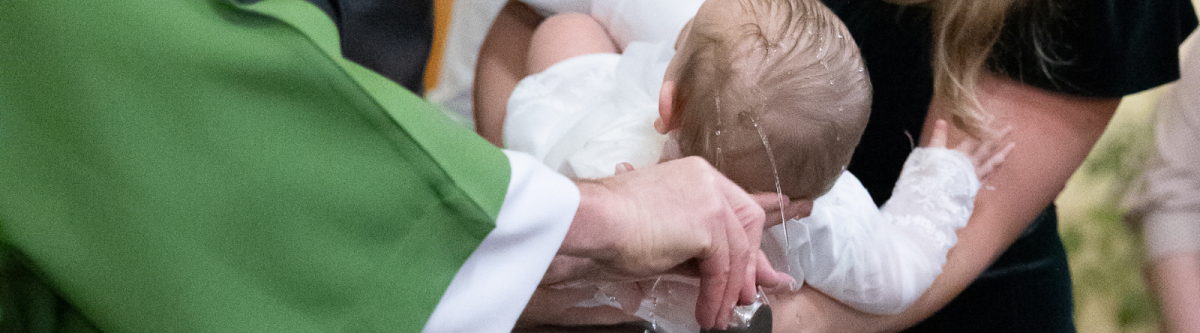
What is the Sacrament of Baptism?
Baptism is the sacrament through which a person is cleansed of original sin (the sin inherited from Adam and Eve) and any personal sins, born anew as a Christian, and welcomed into the Church. It involves water (symbolizing purification and new life) and the words, “I baptize you in the name of the Father, and of the Son, and of the Holy Spirit.” The rite signifies dying to sin and rising with Christ, echoing His death and resurrection.
In simpler terms, Baptism is like a spiritual “welcome ceremony” that cleanses a person’s soul, makes them part of God’s family, and opens the door to other sacraments like Eucharist and Confirmation.
Why is Baptism Important?
Baptism is essential in Catholicism because it is the foundation of Christian life. It removes original sin, imparts God’s grace, and makes the person a member of the Church. Catholics believe it is necessary for salvation, as Jesus said, “Unless one is born of water and the Spirit, he cannot enter the kingdom of God” (John 3:5). For infants, it ensures they start life with God’s grace; for adults, it marks conversion and commitment to Christ.
For non-Catholics, think of Baptism as a sacred initiation, similar to a citizenship ceremony, but for joining God’s spiritual family, with lasting effects on the soul.
What Are the Effects of Baptism?
Baptism has profound spiritual effects:
Cleansing of Sin: It removes original sin and any personal sins (for adults), forgiving all guilt and punishment.
New Life in Christ: It makes the person a “new creation,” sharing in Christ’s divine life.
Indelible Mark: It imparts a permanent spiritual seal, marking the person as belonging to Christ forever.
Membership in the Church: It incorporates the person into the Body of Christ, the Church.
Gift of Grace: It gives sanctifying grace, faith, hope, and charity, strengthening the person for a Christian life.
In everyday terms, Baptism is like a spiritual reset, giving a fresh start with God’s love and support.
How Does Baptism Happen?
- Preparation: For infants, parents and godparents prepare through meetings with a priest or deacon, learning about the sacrament’s meaning and their role in raising the child in faith. For adults, preparation often involves the Order of Christian Initiation of Adults (OCIA), a months-long process of learning Catholic teachings, prayer, and conversion.
- The Ceremony: Baptism typically occurs during a Mass or a separate rite. The minister (usually a priest or deacon, but anyone in emergencies) pours water over the person’s head (or immerses them) while saying the Trinitarian formula. Symbols include a white garment (purity), a candle (Christ’s light), and anointing with chrism (sealing with the Spirit). For infants, godparents promise to support the child’s faith; for adults, it’s a personal commitment.
Who Can Receive Baptism?
Anyone not yet baptized can receive the sacrament—infants, children, or adults. The Church baptizes infants to give them grace early, relying on parents’ and godparents’ commitment to raise them in faith. Adults must profess faith and desire Baptism. Non-Catholics seeking to join the Church receive it if they haven’t been validly baptized elsewhere. A valid Baptism (using water and the Trinitarian formula) from another Christian denomination is recognized by the Catholic Church.
In emergencies (e.g., danger of death), anyone can baptize with water and the proper words, intending to do what the Church does.
Why Do Catholics Believe This?
Catholics believe in Baptism based on Jesus’ command in Matthew 28:19: “Go therefore and make disciples of all nations, baptizing them in the name of the Father and of the Son and of the Holy Spirit.” Early Christians practiced it (Acts 2:38-41), and the Church sees it as God’s plan to share His life with humanity. It’s not merely symbolic but imparts real grace, transforming the soul.
For non-Catholics, Baptism’s emphasis on actual spiritual change (not just a ritual) distinguishes it from some denominations’ symbolic views, though many Christians share a similar belief in its importance.
Additional Resources
- For more on Baptism, visit the Catechism of the Catholic Church online: http://www.scborromeo.org/ccc/p2s2c1a1.htm
- For preparation or scheduling, contact This email address is being protected from spambots. You need JavaScript enabled to view it. or see the United States Conference of Catholic Bishops: https://www.usccb.org/beliefs-and-teachings/what-we-believe/sacraments/baptism